
Should tradies post on Google or Facebook first?
For urgent jobs, test Google Business Profile posts first if customers already find you through Search or Maps. For planned work, Facebook may deserve priority if you already have a local audience.
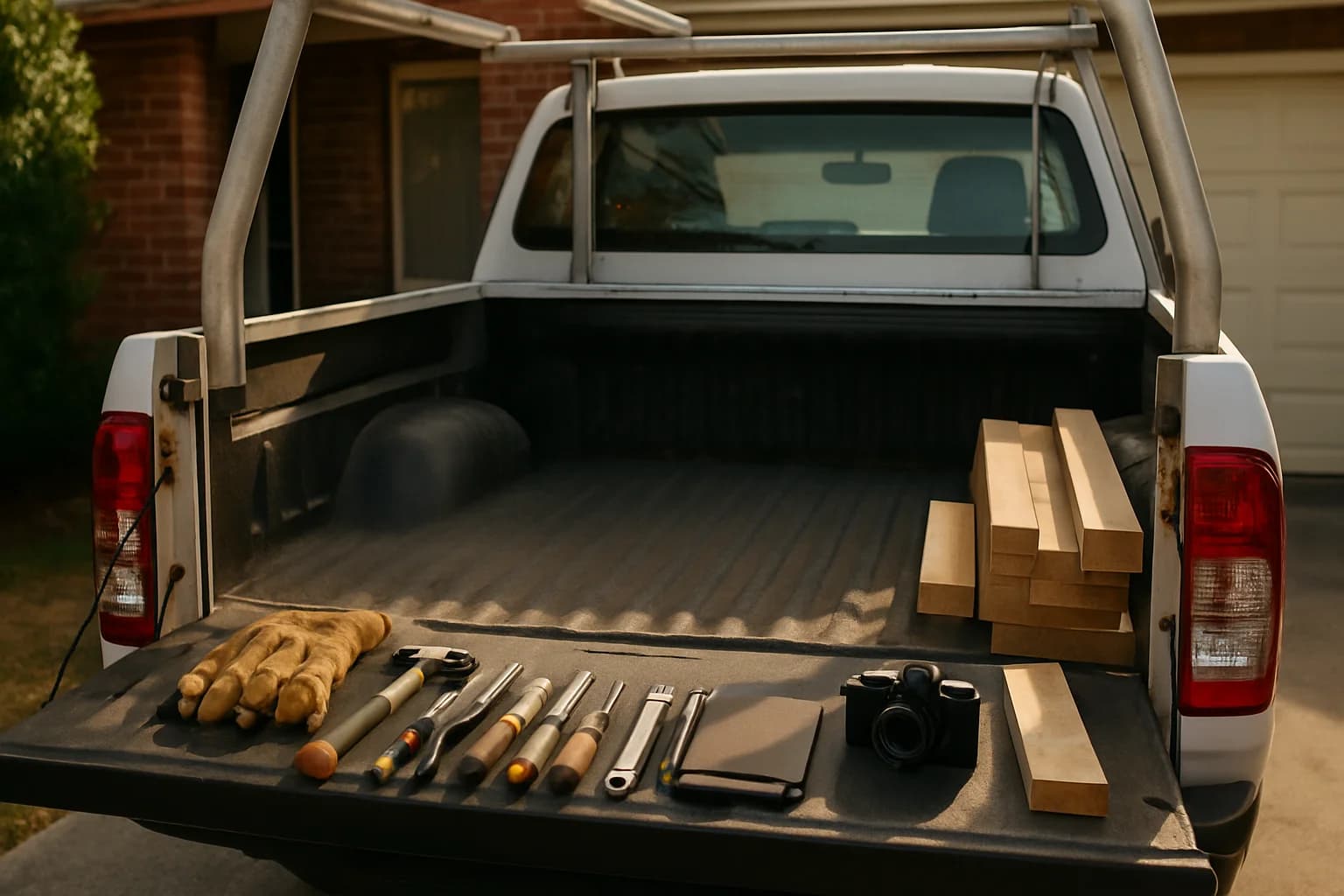
Choose Google Business Profile posts first if you want urgent local jobs and customers already find your profile through Search or Maps. Choose Facebook organic posts first if you want planned work and already have a local audience there.
These are starting recommendations, not proven speed rankings: there is no confirmed evidence in the supplied research that either platform consistently produces faster calls for Australian tradies.
The key complication is your starting point. An existing audience and a clear service offer are more useful decision criteria than a promise that one platform is always quicker. This comparison is about ordinary posts, not Google Ads or paid Facebook campaigns.
What is the practical difference between Google and Facebook posts?
Google Business Profile posts sit alongside your business information. As of October 2026, Google says posts can share updates, offers and events with customers on Search and Maps, helping them decide whether to visit.
For this decision, treat Google posts as useful information for someone looking at your business. Treat Facebook posts as a way to keep showing your work to an audience you are trying to build or maintain. That is a planning framework, not a measured comparison of reach.
| Decision | Google Business Profile posts | Facebook organic posts |
|---|---|---|
| Recommended starting point | Customers already find your profile and ask about immediate services | You already have local customers or prospects engaging with your Page |
| First content to test | A service update with genuine availability | A completed job with a clear explanation of the result |
| Main question to check | Is the post Live and useful to someone considering your business? | Can people see your Page, and are relevant locals responding? |
| What not to assume | Posting guarantees higher rankings or calls | Publishing guarantees distribution to nearby customers |
Neither column is a reason to abandon the other platform. It is a way to choose where your next bit of effort goes.
Which can bring local calls faster?
Separate three things: publishing a post, someone seeing it, and that person making an enquiry. They are not the same milestone.
For Google, there is a specific visibility check. As of October 2026, Google reviews posts, and only posts with a Live status appear on Search and Maps. Pending and Not approved posts do not show. Do not count a submitted post as visible until you have checked its status.
For Facebook, check the basics before judging performance. Meta says Page visibility settings control who can see a Page. Being visible does not establish how many nearby people saw a particular post.
There is no supported hours-or-days promise for enquiries from either channel. A practical sequence is:
- Before posting: choose one service, the area you actually cover and one action you want the customer to take.
- After posting: check that the content is visible and that its contact details and availability are correct.
- Each week: record relevant calls and messages, and ask how the customer found you.
- After a four-week trial: review whether the channel produced enquiries for the work you want.
Four weeks is a suggested review period, not a promised time to results. If you need work immediately, do not build your entire plan around an untested organic post.
Which channel should you test for your type of work?
Choose by the job you want next, not just the trade on your licence or ute.
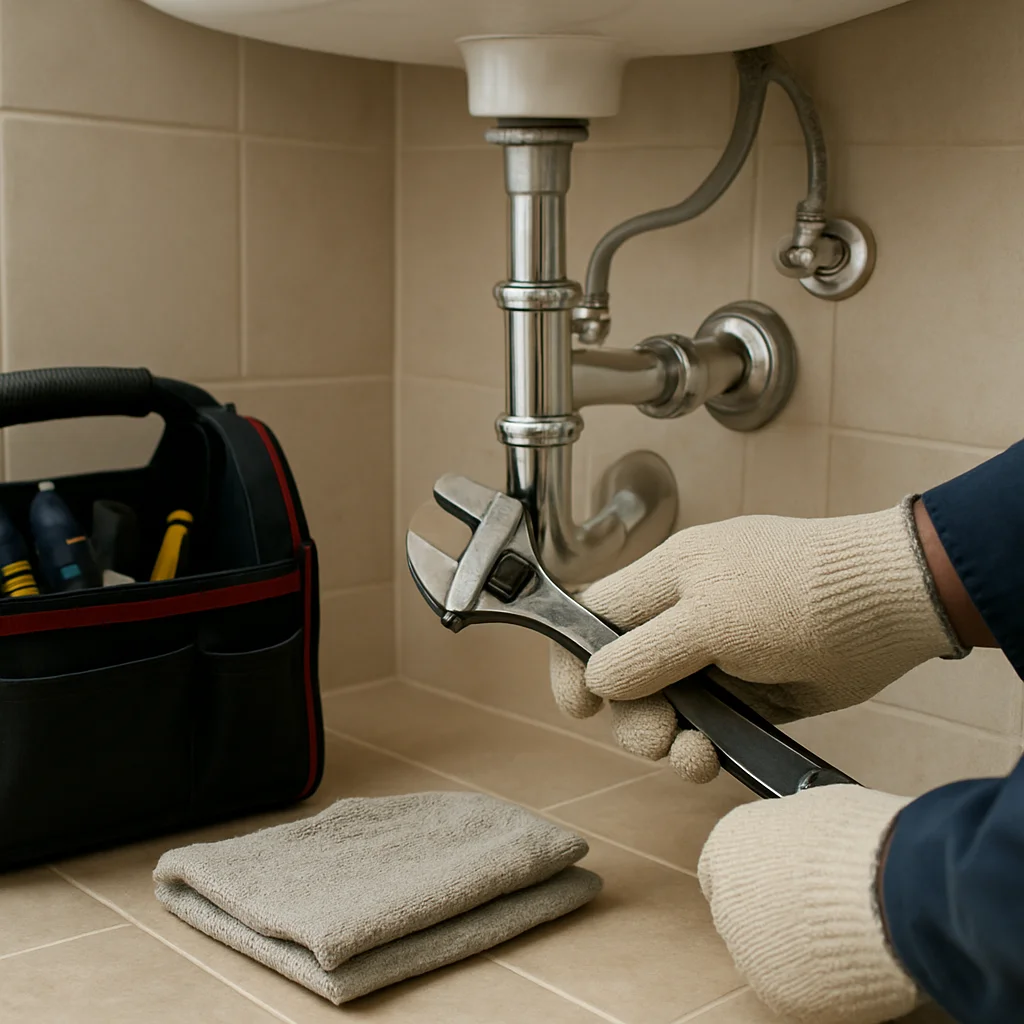 Choose your first channel around the service you want enquiries for.
Urgent repairs and service calls
For a plumber seeking repair work, an electrician taking fault enquiries or an HVAC business offering breakdown appointments, test Google first if customers already find the business there.
Write about the service you can actually provide, your service area and genuine availability. Do not claim same-day attendance unless you can deliver it. This recommendation matches the message to a customer considering help now; it does not mean a Google post creates immediate demand.
Planned improvements and visual projects
For painters, landscapers, tilers, carpenters and builders seeking planned projects, test Facebook first if you already have a relevant local audience.
Start with a finished job or a useful progress detail. Explain what changed and what kind of similar work you want. If you are choosing the photograph, our guide to progress shots versus finished-work photos helps you match the image to the message.
A mix of urgent and planned work
Example: a sole-trader plumber wants both repair calls and bathroom renovation enquiries. They could test a Google service update for repairs first, then use a bathroom project on Facebook when they have capacity to handle renovation enquiries.
That is a hypothetical plan, not a customer result. The useful distinction is the offer, not a blanket rule that every plumber belongs on Google or every landscaper belongs on Facebook.
If neither channel has a useful audience yet, treat the first month as a learning exercise. Choose one, keep the workload small and avoid expecting posting alone to solve discovery.
What should you post each week?
Start with one useful post a week on your priority channel. That is a manageable suggested routine, not an algorithm requirement.
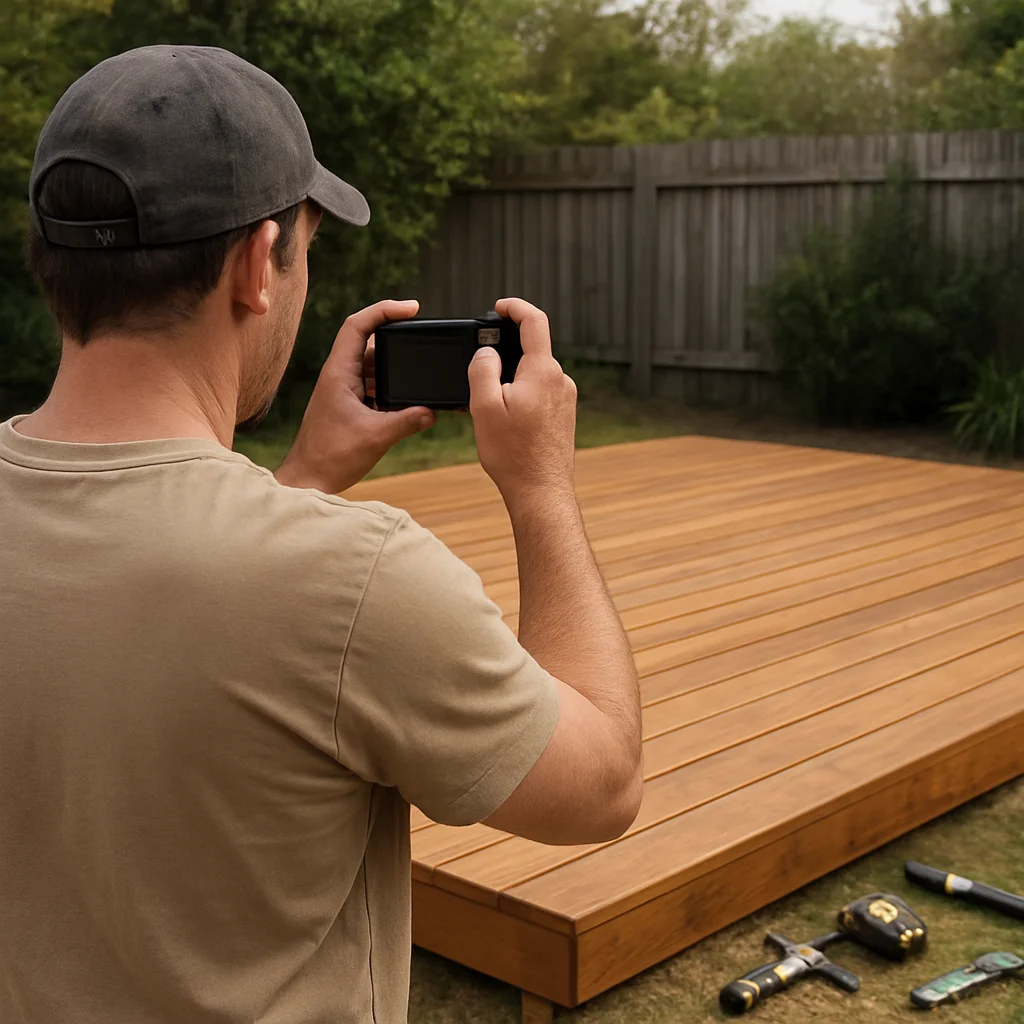 Start with a real job photo and one useful detail about the work.
Use this four-part structure:
- The work: name the job or service plainly.
- The detail: explain one problem solved or one part of the process.
- The location: mention the suburb or service area accurately, without exposing a customer's address.
- The next step: invite a relevant call or enquiry, with truthful availability.
For an urgent-service post, put the service and availability first. For a planned-project post, lead with the work and explain the result. Ask permission before sharing customer property and leave identifying details out of photos.
You do not need a different job every week. If your photo collection is thin, use these ideas for giving older job photos a fresh purpose. Be clear when a photo shows previous work rather than something completed today.
Keep a simple enquiry record: date, service requested, suburb, source reported by the customer and whether the job was a good fit. Record “Google” as Google, not automatically as “Google post”. Ask whether the person remembers seeing the post before attributing the enquiry to it.
When should you post on both?
Add the second channel when you can maintain the first without rushing the content or leaving enquiries unanswered.
Australian Government guidance recommends choosing platforms your customers use and doing one or two channels well rather than many badly. There is no need to turn a two-channel decision into a commitment to post everywhere.
Use this decision aid at your review:
- Relevant enquiries are coming in: keep the priority channel and repeat useful themes.
- Posts are visible but enquiries are unsuitable: adjust the service, area or message before increasing volume.
- You cannot tell what is working: improve your enquiry notes before declaring a winner.
- The routine is manageable and you have another useful audience: test the second channel with an adapted version of the same job content.
Keep the photo if it suits both. Change the opening and next step to match what you want each post to achieve.
Where TradiesPost fits
TradiesPost's Calendar & Scheduling feature lets you see the month at a glance, schedule to Facebook, Instagram and Google Business, and move posts when the week changes. You can use it to maintain one priority channel first, then add another when you are ready, as explained in how TradiesPost scheduling works.
It helps organise the posting routine; it does not guarantee local reach, higher rankings or calls. If you only publish an occasional post on one platform, posting directly may be enough.
When you want a steadier routine around the jobs you already do, you can start with TradiesPost.
Frequently asked questions
Do Google Business Profile posts improve rankings?+
The supplied official guidance explains where posts appear and how they help customers learn about a business. It does not establish a ranking improvement from posting. Use posts to communicate useful information rather than treating them as a guaranteed ranking tactic.
Do Facebook posts automatically reach nearby customers?+
Do not assume that publishing a post means nearby customers have seen it. Check your Page visibility settings and record whether relevant local enquiries follow. The supplied research does not establish a local reach figure for organic Facebook posts.
Which platform gets tradies calls faster?+
There is no confirmed head-to-head evidence in the supplied research. Test Google first for urgent work if customers already find your profile there, or Facebook first for planned work if you already have a local audience. These are conditional recommendations, not speed guarantees.
Should I post on Google and Facebook every week?+
Start with one priority channel if time is tight. One useful weekly post is a suggested routine, not a platform requirement. Add the second channel when you can keep the content accurate and handle the enquiries.
How soon can a Google Business Profile post appear?+
Google reviews posts, and only posts marked Live show on Search and Maps. Pending and Not approved posts do not show. The supplied facts do not establish a fixed review time or a time to the first enquiry.
About the author
StitchedUp TeamEditorial team
Practical guides for Australian tradies on quoting, getting paid, winning work and running the business side.
How we research and review articlesKeep reading
Social media · 20 October 2026
Should tradies share more progress shots or finished work?
Lead with the finished result, then use before and progress photos to explain the work behind it. Here’s how to choose a useful mix for your trade.

Social media · 22 October 2026
Give Old Job Photos a Fresh Purpose on Tour Tradie Social Feed
You can post an old job photo again without repeating the same message. Use this sorting system, reuse matrix and caption checklist to give each post a useful new purpose.

Payments & accounting · 20 October 2026
Chase overdue invoices firmly without losing good customers
You don't need to apologise for asking to be paid. Use this practical follow-up sequence, with email and SMS wording, to stay polite, clear and firm.
TradiesPost
Your social media, sorted in 10 minutes